Kimi K3.1 Pro vs GPT-6.2: Pricing, Tools, and What Is Known
TL;DRKimi K3.1 Pro is available now with a 1,048,576-token context window and $2 per million input tokens / $10 per million output tokens. GPT-6.2 is not officially documented as of November 6, 2026. Google Cloud quota entries name gpt-6.2-astra and gpt-6.2-sol , and The Information reported a possible Friday launch. Kimi has published token prices; reported per-task figures for GPT-6.2 do not establish how it will be billed. If you need a model today, Kimi is the one you can call. If you already use the GPT tool stack, wait for the official price sheet.
By Cameron Voss
What is confirmed about Kimi K3.1 Pro?
Moonshot released Kimi K3.1 Pro on October 23, 2026. The API IDs are kimi-k3.1-pro and kimi-k3.1-pro-highspeed. The standard model costs $2 per million input tokens and $10 per million output tokens, with a 1,048,576-token context window. Input can include text and images; output is text.
To compare ways to use Kimi for coding, explore our Kimi Subscription guide.
Kimi reports 65.7% on Terminal-Bench 4.0, against 58.2% for GPT-6 Astra. On BenchCAD with tools, Kimi scores 92.7 against 95.9. Artificial Analysis measures 35.9 minutes per task, so it is not a low-latency model, and it scored worse than GPT-6 Astra on a claim-level hallucination test. Keep review in the loop. All GPT-6 numbers here are for GPT-6 Astra, the confirmed predecessor; GPT-6.2 has no published benchmark table.
What is still a leak in GPT-6.2?
As of November 6, GPT-6.2 still has no model card, API price, context window, or benchmark table. Developers found base_model:gpt-6.2-astra and base_model:gpt-6.2-sol in Google Cloud quota pages. The Information reported that new Astra, Sol, and security-focused models could launch as soon as Friday, November 6.
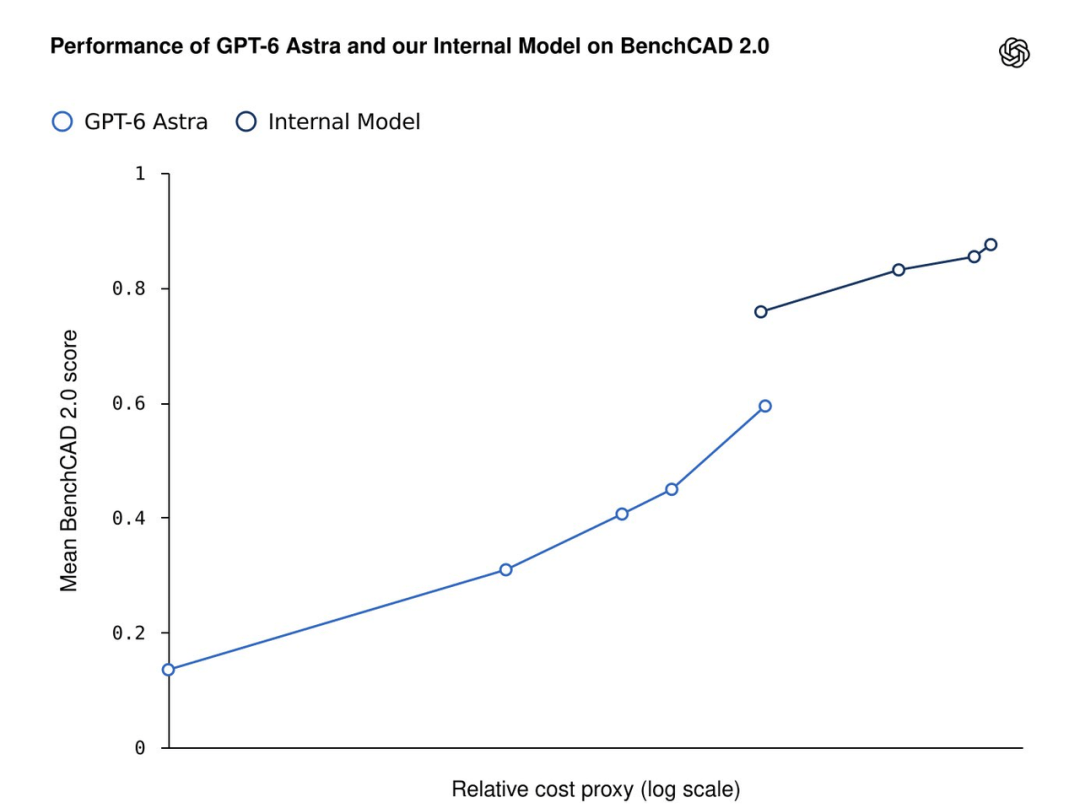
The leaks describe three products. Astra is the high-frequency tier, sold in five effort levels. Sol sits below the top internal model but is not a simple distillation, according to the leak. The security model is expensive and specialized. Leaked BenchCAD-style per-task numbers put Astra Low at $0.44 and 14%, Astra Max at $11.05 and 59%, and the security model at roughly $11 to $37 per task with scores from 76% to 88%. Those numbers are not official. These reported task costs do not establish an official billing model.
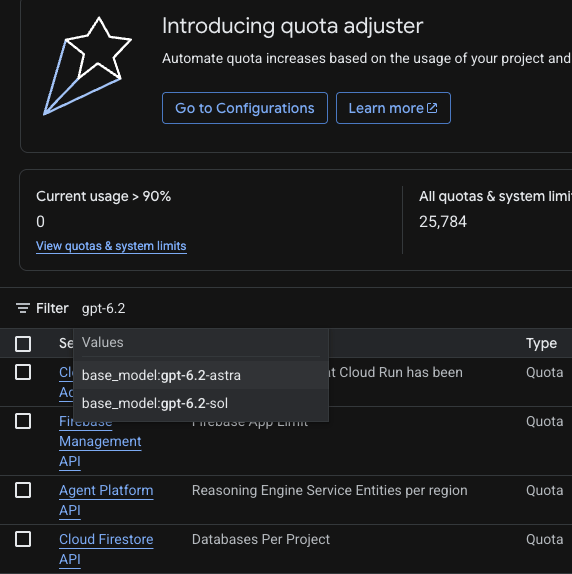
base_model:gpt-6.2-astra and base_model:gpt-6.2-sol before a model card appeared.How do the prices compare?
Kimi has published per-token rates. Reported GPT-6.2 task costs are not an official price sheet and do not show whether the service will charge per task, per token, or by another method. A task-cost estimate can be calculated from token-based charges, so the two figures cannot be compared directly.
A workload of 1 million input tokens and 200,000 output tokens costs $4 on Kimi K3.1 Pro. The same workload on GPT-6 Astra costs $20 at its $10/$50 list price. GPT-6.2 may change that comparison, but no token price is published. Context is closer: Kimi offers 1,048,576 tokens, GPT-6 Astra offers 1.1 million, and GPT-6.2 is unknown.
| Kimi K3.1 Pro | GPT-6.2 (reported) | |
|---|---|---|
| Status | Available since October 23, 2026 | Not officially documented as of November 6, 2026 |
| API IDs | kimi-k3.1-pro, kimi-k3.1-pro-highspeed | gpt-6.2-astra, gpt-6.2-sol (quota-page strings) |
| Context | 1,048,576 tokens | Unknown |
| Price | $2 input and $10 output per 1M tokens | Unknown; leaks quote per-task cost |
| Tool use | Standard function calling; official web_search tool | Responses API built-in tools; details unconfirmed for 6.2 |
| Best fit | Teams that want a known token price and a portable API | Unknown until release and independent testing |
How does tool use differ?
Kimi exposes search as an official tool. The tool uses a standard function-calling protocol with a function named web_search. You can call POST /v1/tools/search and POST /v1/tools/fetch, or use server-side web search through the Responses API. Tool calls use JSON Schema, tool_calls, and tool_choice. The Messages API is Anthropic-compatible. Kimi Code adds a browser, MCP, skills, hooks, and subagents.
The Responses API puts more of the stack inside the response. It exposes function calling, web_search with domain filters, file_search, remote MCP, shell, computer use, and code interpreter. Codex adds browser, computer use, and MCP. In practice, Kimi gives you a tool layer you wire into your own loop, while the Responses API gives you a managed loop. Kimi also cannot turn thinking off, which matters for cost and latency in simple tasks.
Which model should you use?
For a new project that needs a model today, Kimi K3.1 Pro is the practical default. The price and context are published, the API is portable, and the 1M window handles large repositories and long documents. It is slower than the fastest models, so keep tests and review in the loop.
For a team already using the Responses API, Codex, or computer-use stack, wait for the official GPT-6.2 numbers. Reported effort tiers and task costs are not enough to establish final pricing or a comparable cost advantage. Do not move production work based on a leak.