Chat Bots Got Tools. IDEs Got Chat. DeepSeek Harness (DSH) Went a Third Way.
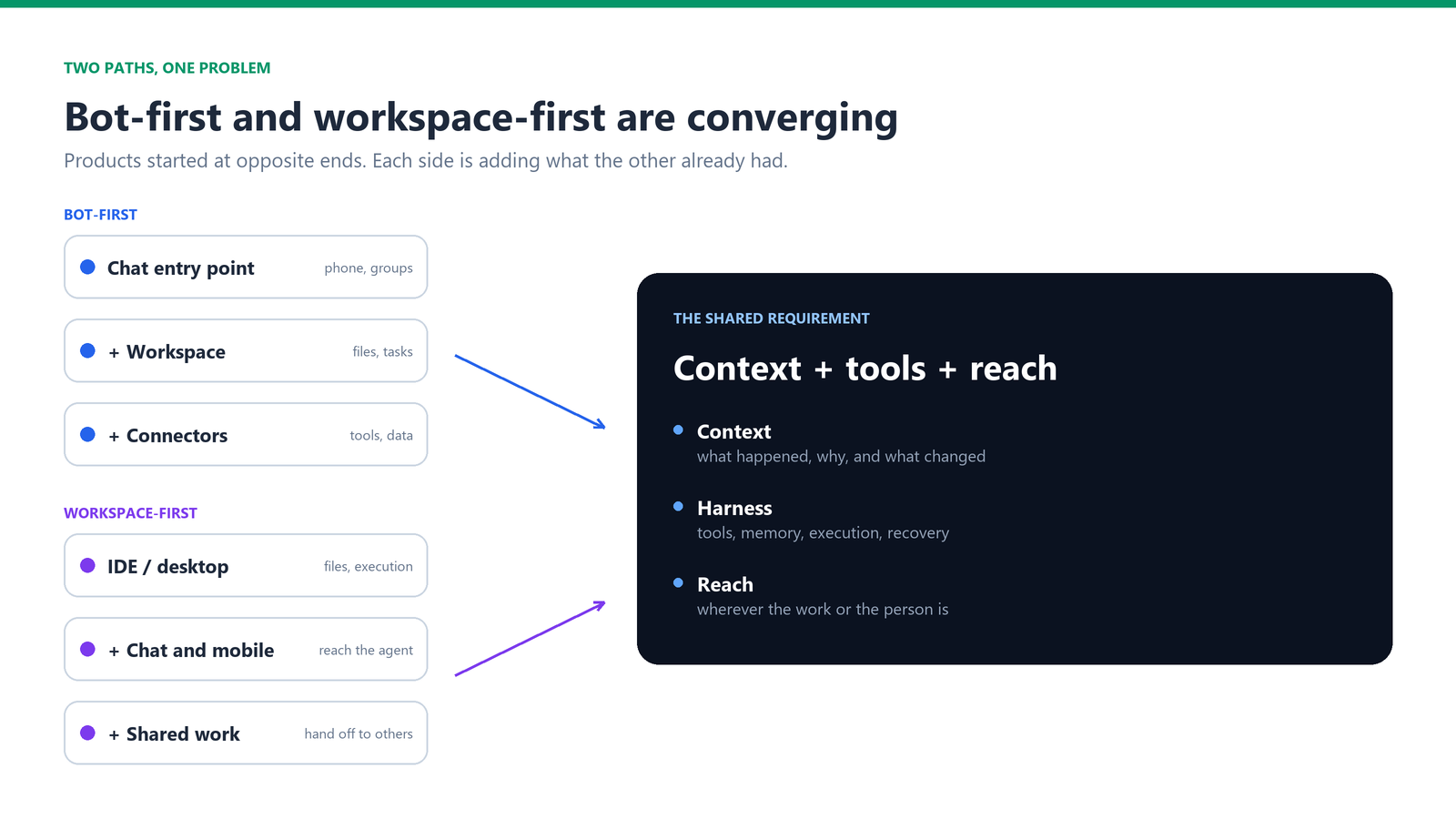
TL;DRAgent products in 2026 moved in two directions at once. Chat-first bots added workspaces and tools. IDEs and desktop workbenches added chat and mobile entry points. Both were solving the same problem: an agent needs context and tools to finish real work, and a way to reach you while it runs.
By Cameron Voss
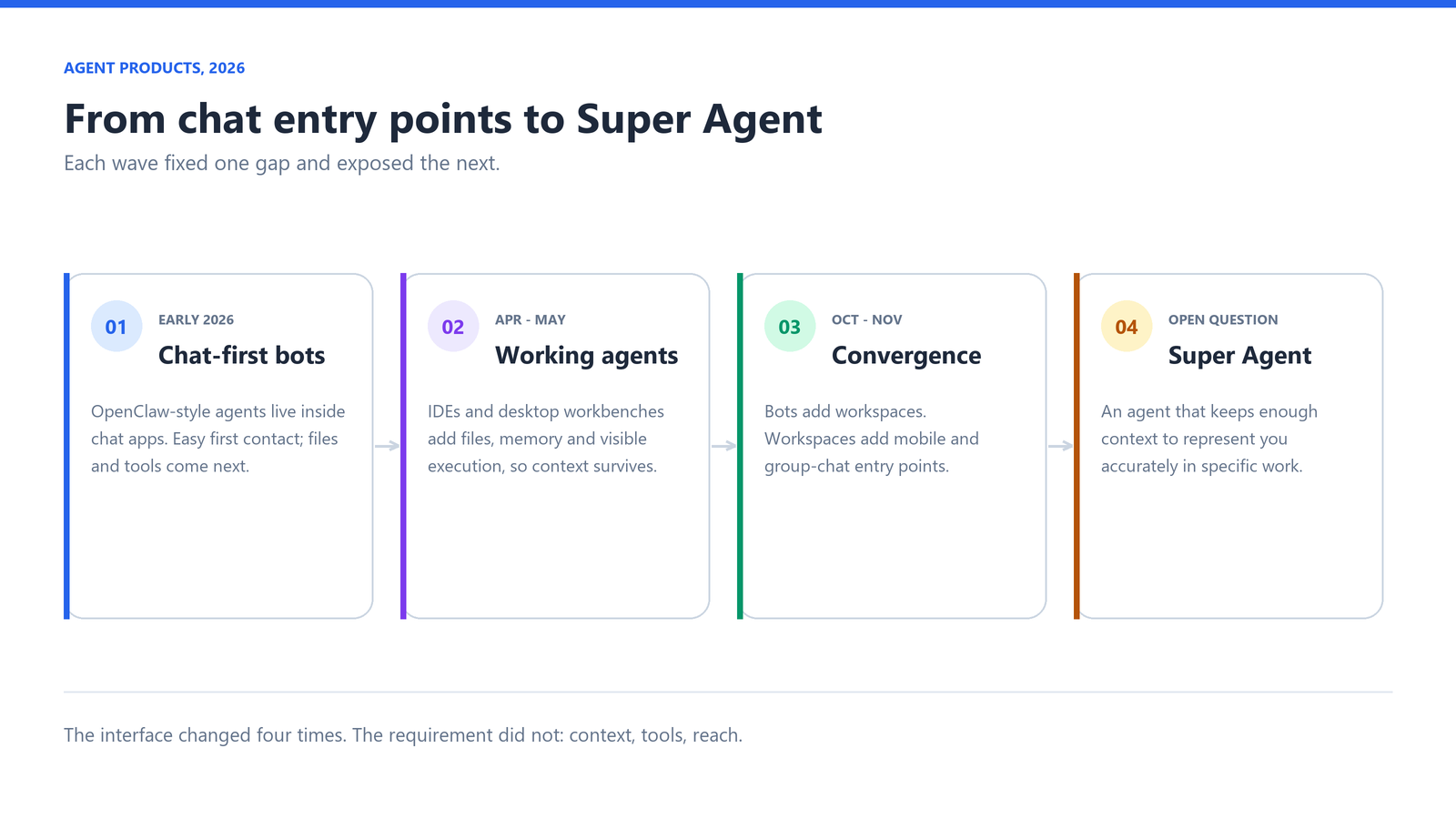
The first agents most people met this year lived in a chat window. By spring, much of that work had moved into IDEs and desktop workbenches. Now chat is coming back on top of them.
Why chat came first
OpenClaw-style products made the first step easy. The agent was already in the chat app, and it could touch files, call tools and operate a device.
The limits showed up soon after. Finding the agent is not the same as giving it enough to finish. It may not know which file is current, why a plan was dropped, or what constraint you added an hour ago.
Why working environments took over
Desktop workbenches keep the work visible: files on one side, content in the middle, the conversation beside it, running tools underneath.
The layout matters less than what it preserves. A chat message compresses a project into one sentence. A shared workspace keeps the edits, failed attempts and reasons. A cloud computer with no access to your local files, group discussion or last session is not the same as your work environment.
Why chat came back
Once an agent has context and working tools, people want it outside the desk. The phone helps, but the useful part is that it is the same agent, with the same files and the same task.
One example: away from the computer, a user asked an agent about a document and mentioned the file was in a group discussion. The agent found the message, opened the attachment and kept reading. The chat was not the substance; the connected tooling was.
Why the environment became editable
Context is what the agent can reach while it works. Harness is the arrangement that lets a model do the work: how tools and memory are used, how tasks run, and what happens when a step fails.
That explains a common failure. An agent that keeps producing weak results may be reading an old file, missing a connector, or working without a constraint you assumed it had. Adding "be more careful" rarely fixes any of those.
DeepSeek Harness matters here because its Creator mode supports building plugins through conversation, extending tools, skills and the interface. The agent that builds the environment and the agent that serves users do not have to be the same one. That is the third path. The environment itself becomes something the agent helps build. Source, permissions, recoverable versions and human confirmation for accounts or payments still apply.
Where the two paths meet
Bot-first and workspace-first products are not converging on one interface. They are converging on the same requirements: context, a working harness, and a way to reach the agent.
Dots pairs a cloud computer and connected apps with ChatGPT, Slack and Teams. Grok Bot pairs a persistent cloud environment and memory with messages and group chats. Muse starts from email, travel and long-term goals rather than a code repository.
The question behind Super Agent
The useful question is what agent can represent a specific person accurately in a specific kind of work, and keep improving at it.
Memory alone does not answer that, and preferences without tools cannot act. One assistant for everything is unlikely. A more realistic path is a series of narrow, reliable agents that can continue work, accept correction and grow their scope.
What makes this year different is who builds the environment. Setup, connectors and handover used to be manual. Some of that can now go to an agent that already has the context.
If you would rather buy a direct DeepSeek endpoint than manage another provider account, the Coding Plan page lists the plans currently in stock.
See the DeepSeek Coding Plan